
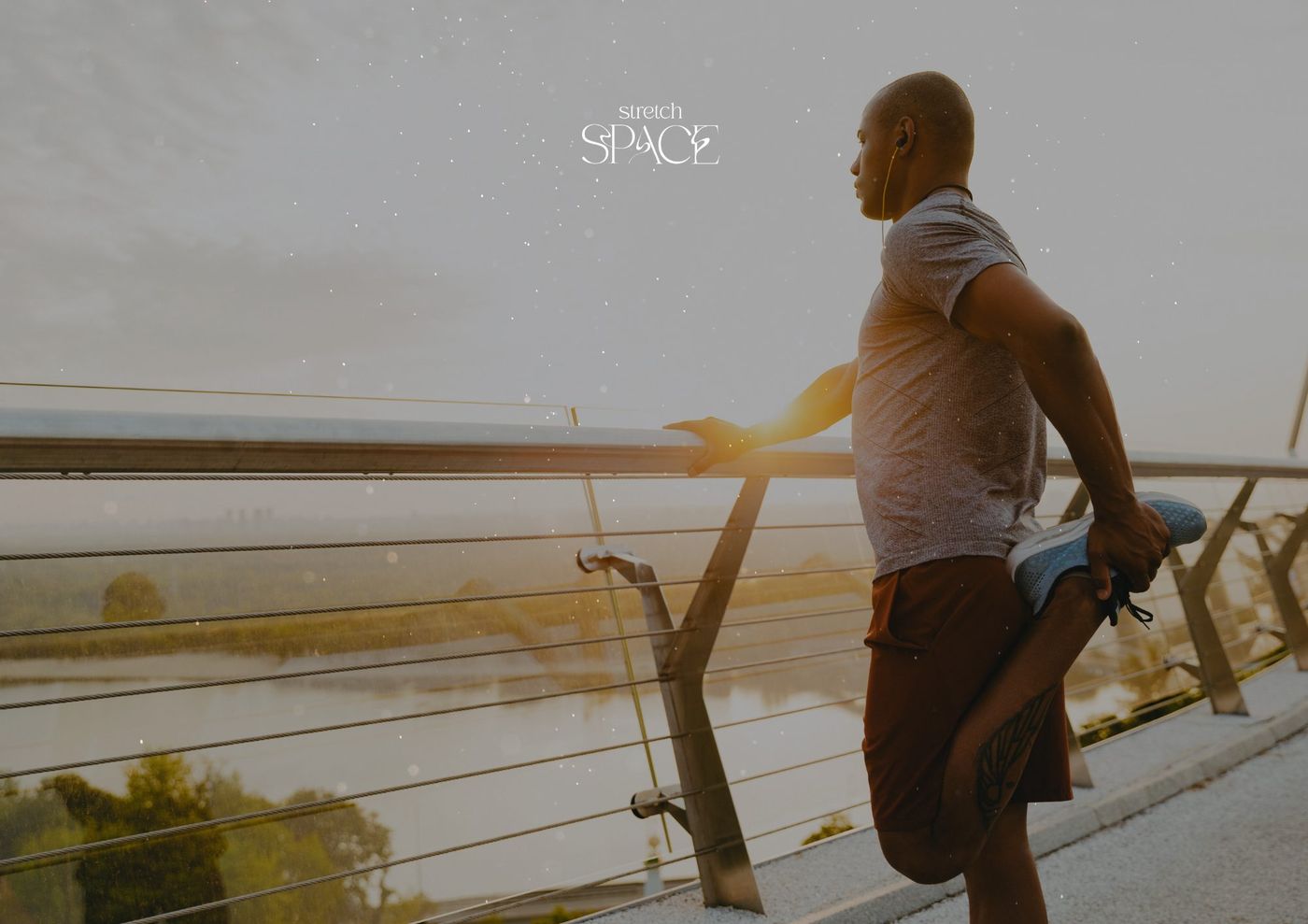
A hard session can leave you feeling accomplished and, the next morning, surprisingly stiff.
The instinct is to stretch it out. Sometimes that's right. Sometimes there's a better version of it.
What training does to your range
Strength training, running, cycling, tennis, padel and most sports ask your body to perform a specific set of movements repeatedly, often through a fairly narrow range.
That's not a flaw. It's the point of training. But it does mean that the more consistently you train, the more your body specializes, and the more valuable it becomes to deliberately visit ranges your sport doesn't ask for.
Mobility work is where those unvisited directions get some attention.
Timing matters more than people think
Immediately after hard training, your muscles have already been through a lot. Aggressive stretching in that window isn't automatically helpful, and for some people it just adds fatigue to fatigue.
A reasonable approach:
- Right after training: gentle movement, easy ranges, a genuine cool-down. Nothing forceful.
- Later that day or the next: often a better window for deeper mobility work, when things have settled and you can tell the difference between soreness and restriction.
- On rest days: frequently the best time for a full session, since you're not competing with training fatigue.
None of that is a rule. It's a starting point to experiment with.
Match recovery to the work you did
A heavy lower body day and a long run leave you feeling different, and they deserve different responses. So does a padel match, which loads you asymmetrically in ways a gym session doesn't.
Pay attention to what actually feels restricted rather than defaulting to the same routine every time. And distinguish between normal post-training soreness, which usually resolves, and something sharp, localized, or persistent, which is a reason to see a medical professional rather than stretch through it.
Where a session fits
Assisted stretching works well as a scheduled part of a training week rather than an afterthought. It gives you dedicated time to slow down, breathe, and work through areas that feel restricted, with someone else managing the position so you're not adding another task to your day.
Athletes and regular trainers often find that the ranges they can't access alone are exactly the ones their sport has been quietly narrowing. If you're building a routine around this, how often to schedule mobility work is the next question, and the difference a specialist makes explains why the guided version tends to reach further.