Stretching on your own absolutely has value. We actually want you to move between sessions, and we'll usually send you home with something to work on.
But being stretched feels different from stretching. Here's the honest explanation of why.
You can't be the operator and the subject at the same time
When you stretch yourself, you're doing two jobs simultaneously. You're the person being stretched, and you're the person creating, holding and regulating the stretch.
That means part of you is always working. You're balancing. Gripping a strap. Bracing a limb. Deciding how far is too far while you're inside the sensation, which is the worst possible vantage point for that decision. And often quietly wondering whether you're even doing it right.
Take those jobs away and something changes immediately. You can breathe. You can actually relax the muscle being stretched, which is much harder than it sounds when you're also holding yourself in position.
A second set of hands can do things yours can't
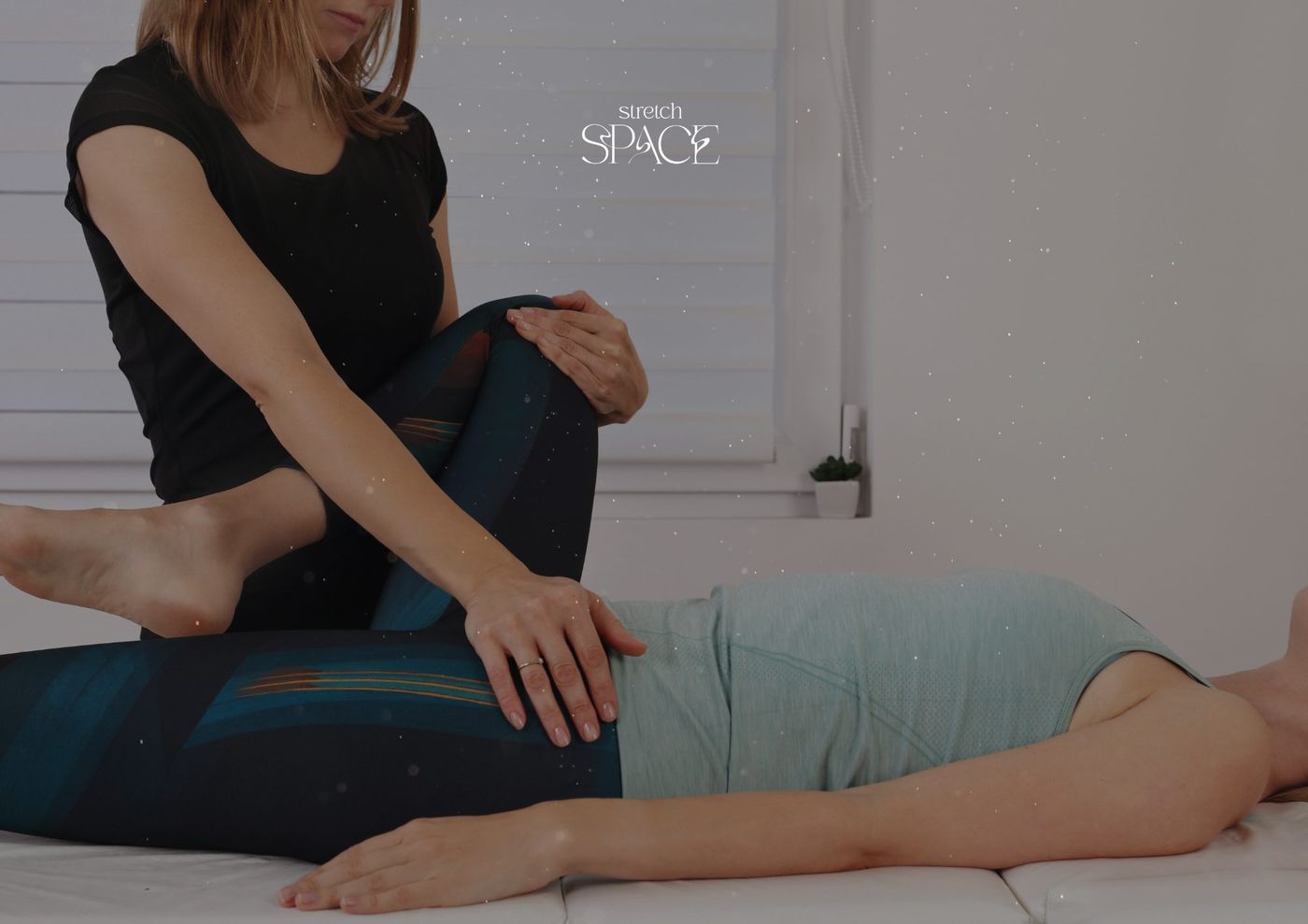
A trained specialist can:
- Change angles mid-stretch based on what they feel, finding restrictions you wouldn't have located on your own
- Control intensity precisely, backing off the instant something changes rather than after you've overdone it
- Stabilize one area while moving another, which is often the only way to isolate a specific range
- Work through several positions in sequence without you resetting between each one
- Respond to feedback in real time, adjusting as you tell them what you feel
That last one matters more than anything technical. A session is a conversation.
What we actually do in a session
At Stretch Space, sessions may incorporate assisted stretching, PNF techniques, mobility work, and fascia-focused techniques depending on your needs and how your body responds on the day.
You're on a table. You're not working. Your specialist moves you through ranges, and your job is essentially to breathe and give honest feedback. Most people are surprised by how much of the experience is about relaxing rather than effort.
What solo stretching is still good for
Consistency, mostly. Daily movement, maintaining what you've gained, and giving your body regular input between sessions. That's genuinely valuable and no professional session replaces it.
The two work together. Sessions open up ranges, and your own practice keeps you familiar with them. If you're wondering how to balance them, our piece on frequency is the natural next read, and how range of motion actually develops explains why both parts matter.